
Red Light Therapy: What the Glow Is Really About
Red light therapy is everywhere, from face masks to full-body panels. An honest look at what the evidence genuinely supports for skin and recovery, what's overhyped, and how to use it sensibly and safely.
March 16, 2026 · By The Editors, Healing Stories Network · 3 min read
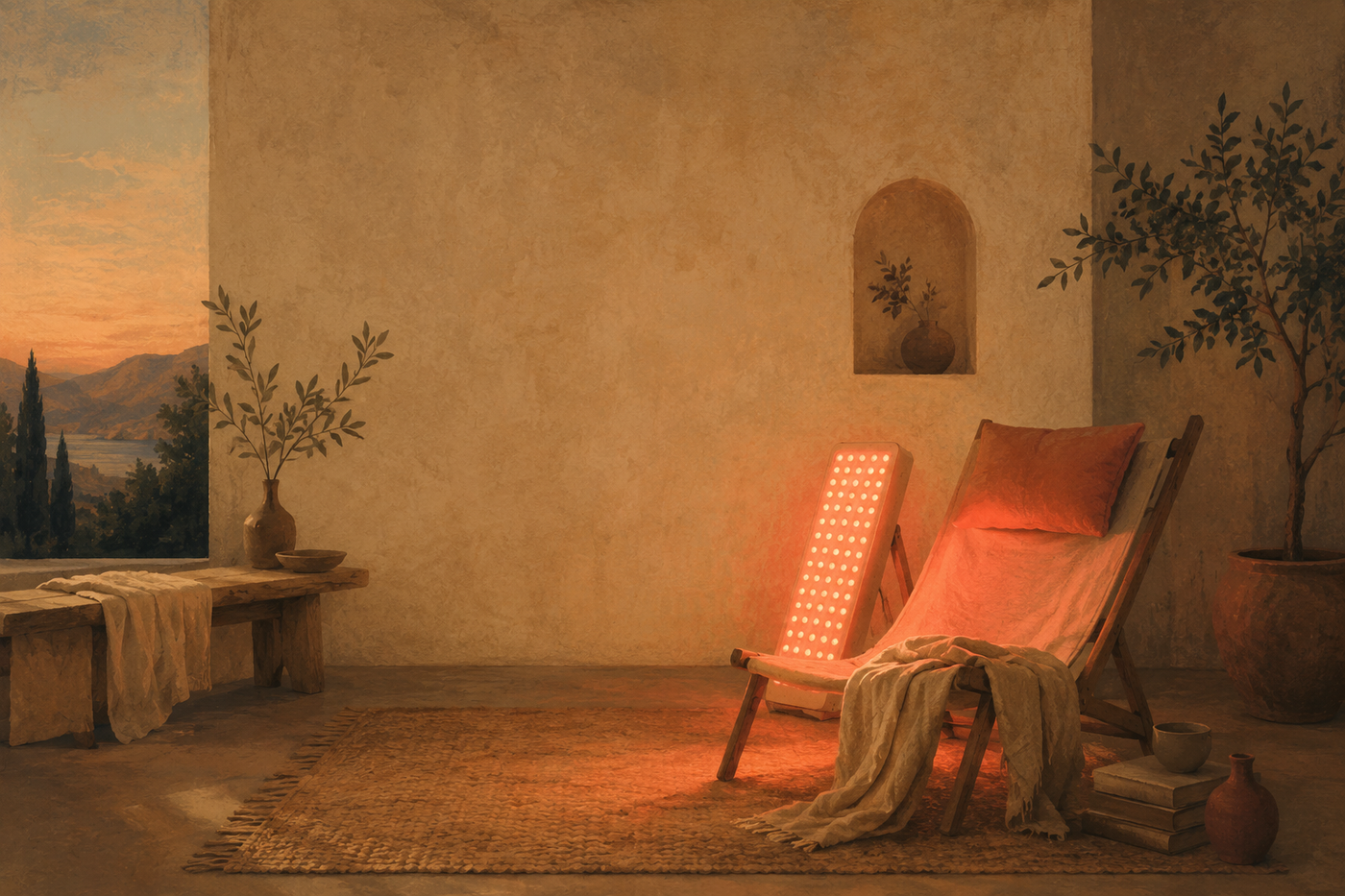
Red light therapy, all those glowing panels and face masks, has moved from clinics and gyms into people's homes, promising better skin, faster recovery, and a good deal more. Behind the futuristic glow is a real technology with a genuine, if narrower, evidence base, surrounded by a halo of claims that run well ahead of it. This is an honest look at what red light therapy is really about, drawn from the accounts in our Wellness & Biohacking collection.
Nothing here is medical advice. Devices and conditions vary widely, and a doctor or dermatologist is the right person to ask about your particular situation.
What it actually is
Red light therapy, sometimes called photobiomodulation, uses red and near-infrared light at particular wavelengths. The underlying idea is that this light is absorbed by cells and may support their energy production and capacity to repair. It is a real and active area of research rather than mysticism, and understanding it that way, a plausible biological effect being studied, sets a sensible frame for both the promise and the hype.
Where the evidence is genuinely promising
The best-supported uses are fairly specific. There is reasonable evidence for benefits to skin, including fine lines, collagen, and overall complexion, for wound healing, for some forms of hair regrowth, and for muscle and joint recovery and certain kinds of pain. The honest caveat that runs through the accounts is that the effects tend to be modest and gradual rather than dramatic, the product of weeks of consistency rather than a single glowing session. Held to that realistic standard, many contributors found it worthwhile.
Where the claims outrun the science
Around that reasonable core swirls a great deal that is not well supported: promises of fat loss, detoxification, reversing serious disease, or overnight transformation. These deserve scepticism. It does not help that device quality and the actual dose of light delivered vary enormously between products, so that two people using very different gadgets may have entirely different experiences. The most expensive option is not automatically the best, but a very cheap one may simply be too weak to do much.
At home versus in clinic
Clinical and professional devices are generally more powerful than home masks and panels. That does not make at-home use pointless, and plenty of contributors report real if subtle benefits from it, but it does mean expectations should be calibrated and consistency taken seriously. Results, where they come, tend to arrive over weeks and months of regular use, not days, and abandoning a device after a fortnight is a common way to conclude, prematurely, that it does nothing.
Using it sensibly and safely
A few practical points come up repeatedly. Follow the device's instructions on distance and timing rather than assuming more is better. Protect your eyes, since staring into bright LEDs is not wise and many people use goggles. And check with a doctor first if you are pregnant, taking medication that increases light sensitivity, or treating an active skin condition, since light therapy is not appropriate for every situation. Sensible, consistent, modest use is the pattern that serves people well.
The honest harder side
For balance, red light therapy is slow and subtle, which makes it easy to lose motivation before any benefit appears, and some people see little for their time and money. The market is crowded with overhyped and underpowered gadgets, and the technology is no substitute for the proven basics of skin health, above all sun protection, or for medical treatment of a real condition. Useful as a steady adjunct for the right purposes, in other words, and oversold as a cure for everything.
Company for the curious
If you are weighing up a red light device, or already glowing away in front of one, reading how others experienced it, the believers and the unconvinced alike, gives a more grounded picture than any product page. Seeing Red gathers fifty first-person accounts of using red light therapy, honest about the modest pace as well as the results. If you enjoy the wider world of recovery and wellness experiments, our piece on cold water therapy sits alongside it, and you will find more across our wider Wellness & Biohacking collection.
The Reading Room shares lived experience and is not medical advice. Please check with a doctor or dermatologist before starting red light therapy, especially if you are pregnant, taking photosensitising medication, or treating a skin condition.
The Reading Room publishes personal stories and editorial notes from our press. Everything here is companion reading — never medical advice, diagnosis, or treatment. For guidance about your own health, please speak with a qualified clinician.