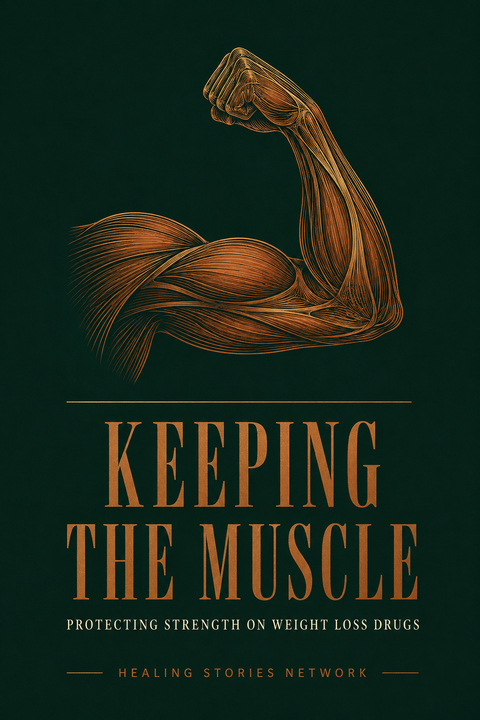
Preserving Muscle on GLP-1 Medications: What to Know
Rapid weight loss on GLP-1 drugs can cost muscle as well as fat. Why that matters, and what people focus on to protect their strength while losing weight.
· By Shashank Bhosale
The press does not currently name a clinical reviewer of record. Read about contributor roles and the review process before using health information. Editors & Contributors.
The GLP-1 medications behind so many weight-loss stories are remarkably effective, but as their use has spread, a quieter question has come into focus: when the weight comes off quickly, some of what is lost is not fat but muscle. People on these medications, and the clinicians guiding them, are paying increasing attention to protecting muscle along the way, because muscle matters for far more than appearance.
This is a companion piece for people taking or considering GLP-1 medications who want to understand the muscle question. It is not medical advice. It is an honest account of what people are learning and focusing on, drawn from many navigating this, and it is no substitute for guidance from your own prescriber.
Why muscle gets lost too
Whenever someone loses a significant amount of weight, by any method, some muscle tends to go along with the fat. This is normal, but with the rapid weight loss that GLP-1 medications can produce, and the reduced appetite that often means eating less protein, the loss of muscle can be more pronounced for some people. Our companion piece on what GLP-1 medications are really like describes the broader experience. People note that the scale alone does not tell the whole story, since it cannot distinguish fat from muscle.
Why muscle matters
People are often surprised to learn how much muscle does beyond strength. It supports metabolism, balance, bone health, blood-sugar regulation, and the everyday ability to climb stairs, carry shopping, and stay independent with age. Losing muscle, particularly for older people, can have real consequences, which is why the goal of treatment is increasingly framed not just as weight loss but as fat loss while keeping as much muscle as possible. Maintaining muscle, people find, is about long-term function, not vanity.
What people focus on
Two themes come up repeatedly in how people try to protect muscle while losing weight. The first is protein: getting enough, even when appetite is low, to give the body the building blocks it needs. Our companion piece on high-protein eating explores this in more depth. The second is resistance or strength training, using muscles against resistance to signal the body to keep them. People also mention that supplements such as creatine are sometimes discussed in this context, which our companion piece on creatine covers. All of this is best personalised with a clinician or dietitian, and none of it is a prescription for you; it is the ground others are exploring with professional guidance.
A fuller picture of success
What people increasingly describe is a shift in how they measure progress on these medications: less fixation on the number on the scale, more attention to body composition, strength, and how they feel and function. Many find that pairing the medication with enough protein and some strength work helps them lose weight in a way that leaves them stronger, not frailer. The medication does the heavy lifting on appetite; protecting muscle, they say, is the part that keeps the results worth having.
If these themes are relevant to you, you can explore more in our Weight Loss & Obesity collection.
This article is a companion, not medical advice. It reflects what people commonly describe; everyone is different. GLP-1 medications, nutrition, and exercise should be guided by the qualified clinicians and dietitians who know your history.
The Reading Room publishes personal stories and editorial notes from our press. Everything here is companion reading — never medical advice, diagnosis, or treatment. For guidance about your own health, please speak with a qualified clinician. Read how we collect and edit patient testimony in our Editorial Standards, or meet the press at The Masthead.
If this piece was useful, the volumes below hold fifty full-length accounts from people who have been through it — the part an article can only summarise.