
Misophonia: When Ordinary Sounds Trigger Rage
Misophonia turns chewing and breathing into nervous-system alarms. People describe the clenched decades, the relief of the name, and what actually helps households cope.
· By Shashank Bhosale
The press does not currently name a clinical reviewer of record. Read about contributor roles and the review process before using health information. Editors & Contributors.
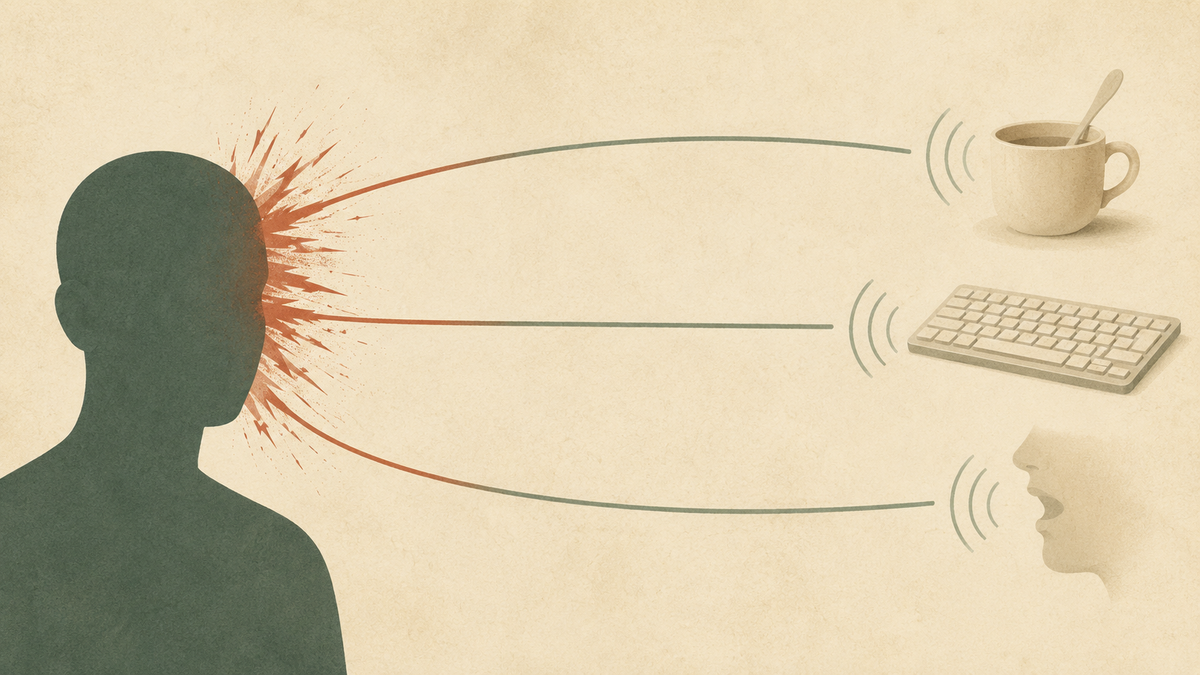
For people who have it, the sound of someone chewing is not annoying — it is a fire alarm in the nervous system. Misophonia, a strong aversive reaction to specific ordinary sounds, has spent years being dismissed as oversensitivity; it is now increasingly recognized by researchers as a real condition with measurable brain differences, and the people who grew up thinking they were simply bad-tempered are discovering there is a name for it.
What it actually feels like
The accounts converge with startling consistency: trigger sounds — chewing, breathing, pen clicks, keyboard clatter, often loudest from the people they love most — producing instant rage or panic that sufferers know is disproportionate and cannot switch off. People describe decades of family dinners endured with fists clenched, relationships strained by requests that sounded absurd out loud, and the deep relief of learning, usually online, that the reaction has a name and a community.
What helps, in people's words
No single treatment owns misophonia yet, and honest accounts reflect that. What recurs: therapy approaches that reduce the panic-about-the-panic rather than promising to erase the trigger; noise engineering — earplugs tuned to speech, background sound at meals, seating strategy; frank household conversations that convert conflict into logistics; and, for many, treating the anxiety and sensory load that amplify triggers. Several describe the biggest shift as internal: from moral failing to neurological quirk, managed rather than blamed.
Why naming it matters
People describe telling family less as diagnosis than as translation — replacing “you disgust me” with “my alarm system misfires” — and report the relationship repair mattering as much as any technique.
Fifty first-person accounts of the mind's quirks and burdens live on our Mental Health shelf; begin with our mental health reading guide.
Companion reading, not medical advice. If sound reactivity is disrupting your life, an audiologist or mental health professional familiar with misophonia can help.
The Reading Room publishes personal stories and editorial notes from our press. Everything here is companion reading — never medical advice, diagnosis, or treatment. For guidance about your own health, please speak with a qualified clinician. Read how we collect and edit patient testimony in our Editorial Standards, or meet the press at The Masthead.
If this piece was useful, the volumes below hold fifty full-length accounts from people who have been through it — the part an article can only summarise.


