Dumping Syndrome: The Post-Surgery Condition Patients Teach Each Other
Dumping syndrome is a documented, common aftermath of stomach surgery that patients learn about from each other. Early vs late dumping, the meal mechanics that control it, and what teams should say sooner.
· By Shashank Bhosale
The press does not currently name a clinical reviewer of record. Read about contributor roles and the review process before using health information. Editors & Contributors.
It strikes twenty minutes after a meal that seemed innocent: sudden cramping, nausea, a racing heart, sweating, the urgent need to lie down or find a bathroom — or, in its late form, the shakiness and brain fog of blood sugar crashing two hours after dessert. Dumping syndrome is thoroughly documented in the surgical literature as a common consequence of stomach operations — bariatric surgery above all, but also cancer resections, ulcer surgery, and hiatal hernia repairs — and patients consistently describe learning its name from other patients rather than from anyone at the hospital.
What is actually happening
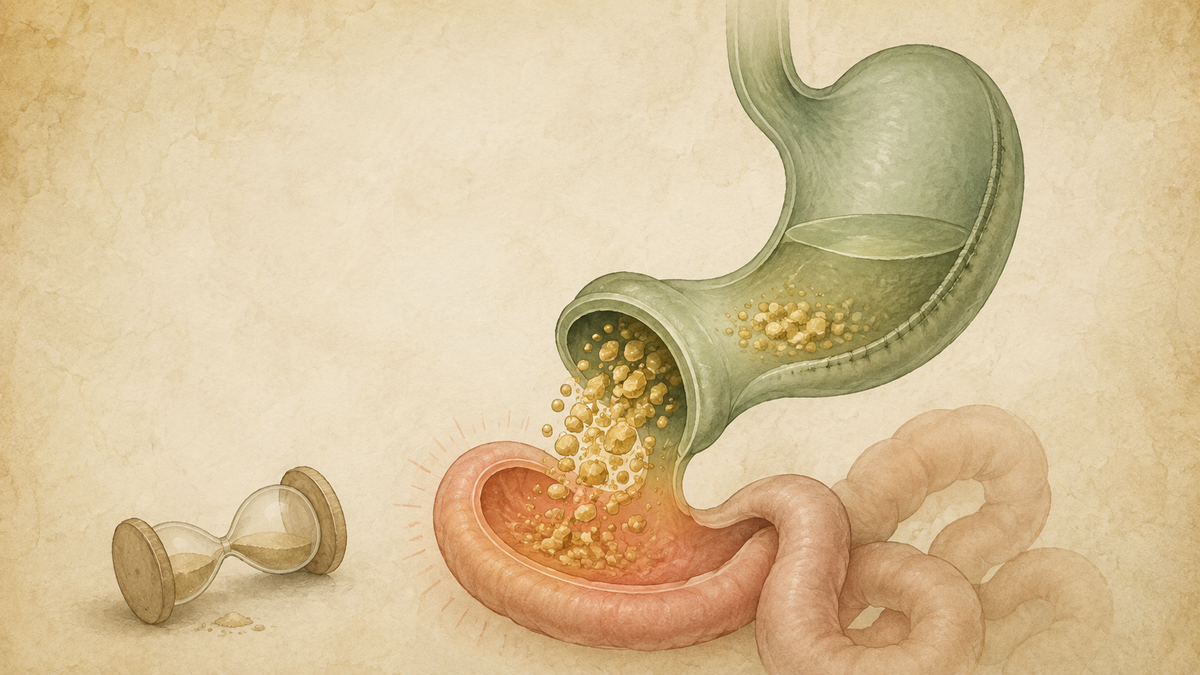
A stomach altered by surgery can release food into the small intestine too fast. Early dumping — within about half an hour — is a plumbing and fluid-shift event: concentrated food drawing fluid into the gut, triggering cramping, diarrhea, palpitations, and lightheadedness. Late dumping — one to three hours after eating — is a sugar event: rapid carbohydrate absorption spiking insulin, which then overshoots into hypoglycemia. Many patients experience both, and describe the detective work of learning which meals detonate which.
The management the literature actually supports
The core treatment is dietary mechanics, and patients confirm it works when taught properly: small, frequent meals; protein and fat forward; fast sugars — juice, sweets, refined starches — identified as the main triggers and minimized; liquids separated from solids by half an hour, because washing food through is what accelerates it; and lying back briefly after meals for early dumpers. For late dumping, veterans describe carrying glucose treatment while working with clinicians on prevention — and for the minority whose symptoms persist despite diet, medication options exist and are documented.
What patients wish surgery teams said
That this is common, named, and usually controllable — told before the first episode, not after months of fearing meals. Several describe the syndrome souring an otherwise successful surgery until a dietitian, often found through a bariatric program, rebuilt their eating from first principles.
Fifty first-person accounts of altered stomachs and rebuilt eating live on our Gut & Digestive Health shelf; our surgery reading guide pairs well, as does our piece on bariatric surgery in the GLP-1 era.
Companion reading, not medical advice. Post-meal collapse or hypoglycemia after stomach surgery deserves your surgical team's attention.
The Reading Room publishes personal stories and editorial notes from our press. Everything here is companion reading — never medical advice, diagnosis, or treatment. For guidance about your own health, please speak with a qualified clinician. Read how we collect and edit patient testimony in our Editorial Standards, or meet the press at The Masthead.
If this piece was useful, the volumes below hold fifty full-length accounts from people who have been through it — the part an article can only summarise.