
Dental Implants: What Getting One Is Really Like
Dental implants take most of a year, not three visits. Patients describe the grafting waits, the gap months, the money math against bridges, and the maintenance clause after.
· By Shashank Bhosale
The press does not currently name a clinical reviewer of record. Read about contributor roles and the review process before using health information. Editors & Contributors.
Getting a dental implant is routinely described by dentists as straightforward, and by patients as a longer, stranger journey than anyone mentioned at the consult. It is also, for many, the most expensive purchase of the year. What people who have finished the process describe most is the gap between the brochure timeline and the lived one.
The real timeline
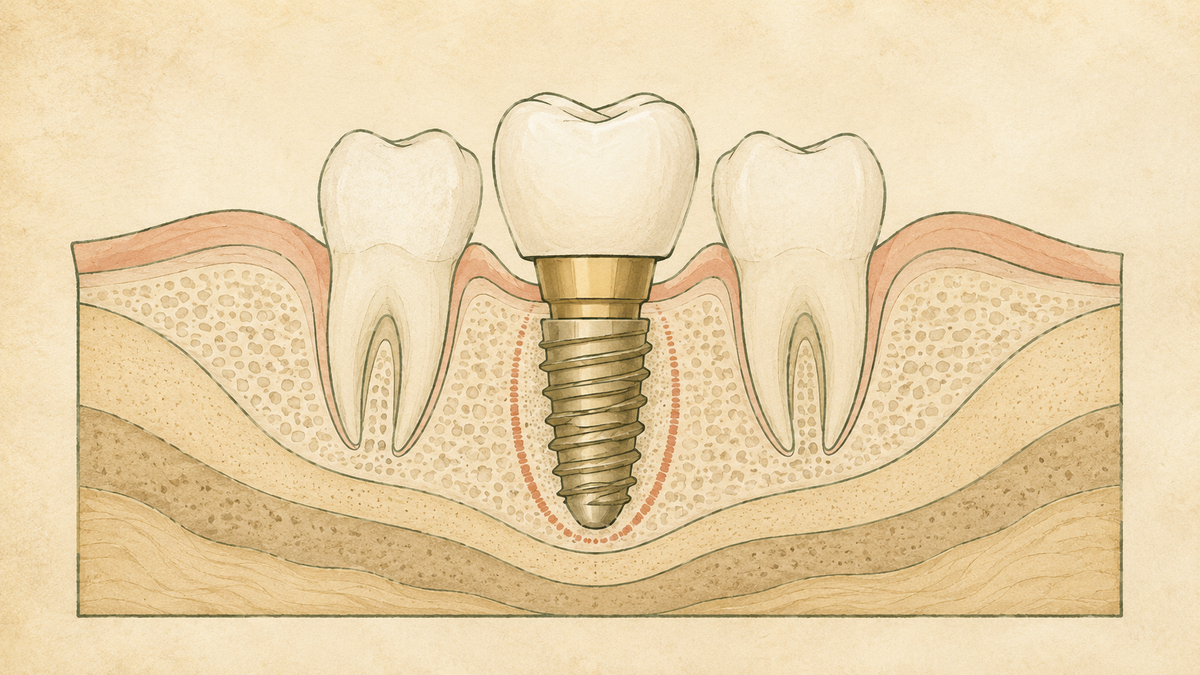
The brochure shows three visits; the calendar usually shows most of a year. Accounts describe the actual sequence: extraction, often with bone grafting and months of healing; implant placement into the jaw — which most people rate as easier than the dread suggested, closer to a filling than a surgery in sensation; then months of osseointegration while the bone claims the titanium; then abutment and crown. People with good bone and simple cases move faster; smokers, diabetics, and molar cases move slower. The tooth-shaped gap in photographs, and the temporary solutions bridging it, feature in nearly every honest account.
Money and the menu of alternatives
Per-tooth costs commonly run to several thousand, insurance participates reluctantly, and patients describe genuine deliberation against bridges and partials — cheaper now, with trade-offs later. Those who traveled abroad for implants report real savings and a hard-earned caveat: complications come home even when the dentist doesn't. For people facing a whole arch rather than a single tooth, the full-arch route is its own decision: our anthology A Full Arch in a Day: All-on-4 Implant Stories collects fifty accounts of it, including the cases that did not hold.
What veterans report on the far side
The overwhelming sentiment is worth-it: biting into apples again, an end to hiding a smile. The maintenance clause comes attached — implants can't decay but their gums can still fail, and peri-implantitis punishes the flossing lapses natural teeth forgave. Receding gums around the work are their own chapter, gathered in Covering the Roots: Gum Grafting Stories.
Fifty first-person accounts of dental work, dread, and repair live on our Dental & Oral Health shelf; start with our dental reading guide.
Companion reading, not medical advice. Implant suitability depends on bone, health, and habits — get an individual assessment and a written treatment plan.
The Reading Room publishes personal stories and editorial notes from our press. Everything here is companion reading — never medical advice, diagnosis, or treatment. For guidance about your own health, please speak with a qualified clinician. Read how we collect and edit patient testimony in our Editorial Standards, or meet the press at The Masthead.
If this piece was useful, the volumes below hold fifty full-length accounts from people who have been through it — the part an article can only summarise.


